

Flowers and greenery add life and character to any rooftop or plaza deck, but without proper design and installation, planters can quickly turn into a waterproofing challenge. To help you avoid costly leaks and root intrusion, we’re sharing 8 essential tips for installing planters the right way.
Tip 1: Use solid concrete walls
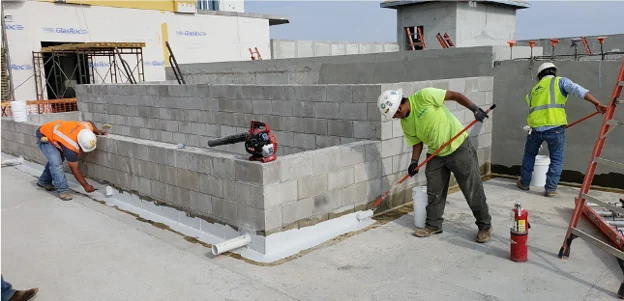
The planter walls should preferably be cast-in-place as they provide superior strength and minimal gaps compared to alternatives like CMU blocks (concrete blocks). This solid construction creates a seamless surface ideal for waterproofing adhesion. If using CMU blocks, apply a cementitious parge coat to fill voids and smooth the surface, ensuring the waterproofing membrane bonds effectively without weak points that could lead to future leaks.
Tip 2. Install waterproof block trails
For planters built on plaza decks or rooftops, it is recommended to install waterproof block trails beneath planter walls. This allows the waterproofing layer to be applied continuously across the whole deck without interruption, preventing leaks.
This simple step prevents water infiltration at wall-deck junctions, a common failure point in rooftop greenery setups.
Tip 3. Repair surface defects first
Before installing waterproofing, fix any defects such as:
Use appropriate patching compounds to restore a uniform, clean substrate that promotes strong membrane adhesion. Skipping this preparation risks delamination and leaks, as imperfections can compromise the system's integrity over time.
Tip 4. Choose the right waterproofing system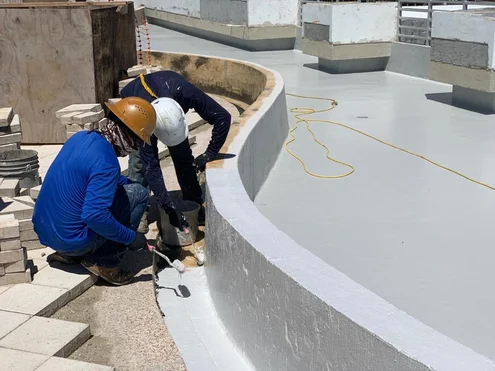
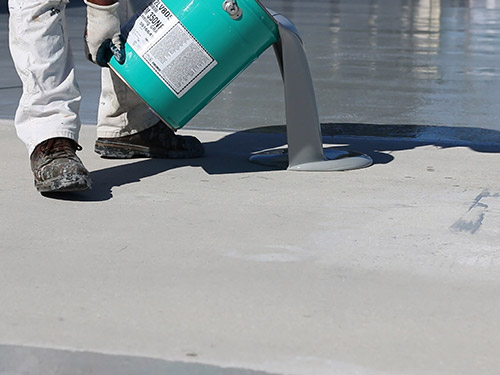
Choose a waterproofing system tailored to your planter's design, such as cold-fluid-applied membranes for confined or elevated spaces, instead of hot-applied waterproofing (heated materials) as it can be difficult and unsafe in tight spaces.
These liquid systems pour easily into tricky shapes, creating one seamless waterproof layer with no joints. For example, cold-applied products work best in tall, narrow planters because they’re flexible and long-lasting.
Tip 5. Install drains and pipes before waterproofing
All drains and pipe penetrations must be installed before waterproofing starts to allow simultaneous flashing and sealing around these critical areas. When you create strong, leak-proof connections from the start, there is no need for remedial patches later that could break under water pressure.
Timing is crucial because planters deal with lots of water: imagine daily irrigation for plants plus heavy rain during storms. Doing it early ensures the whole system handles that volume smoothly without weak spots or backups.
Tip 6. Add a robust root barrier
A dedicated root barrier should be installed to stop aggressive plant roots from damaging or puncturing the waterproofing membrane over years of growth.
Advanced systems like PUMA-based coatings already act as a root barrier, so an additional layer may not be needed. This proactive measure extends the lifespan of both the planter and underlying structure.
Tip 7. Create proper drainage slopes
For rooftop or plaza planters, the concrete base should be sloped toward the drain at a minimum of 1-2% so water flows out and prevent ponding. This design mimics natural drainage, directing excess moisture away from vulnerable areas and reducing hydrostatic pressure on the waterproofing. Accurate sloping during pour ensures long-term performance even under heavy watering or storms.
Tip 8. Secure drains at the right level
The drain should be positioned with or slightly below the planter floor so water can drain efficiently. A drainage mat and root barrier should also be installed under the drain’s clamping ring for optimal flow. This setup promotes efficient evacuation of water while protecting against blockages and root interference. Correct installation here avoids backups that could overflow and breach waterproofing elsewhere.
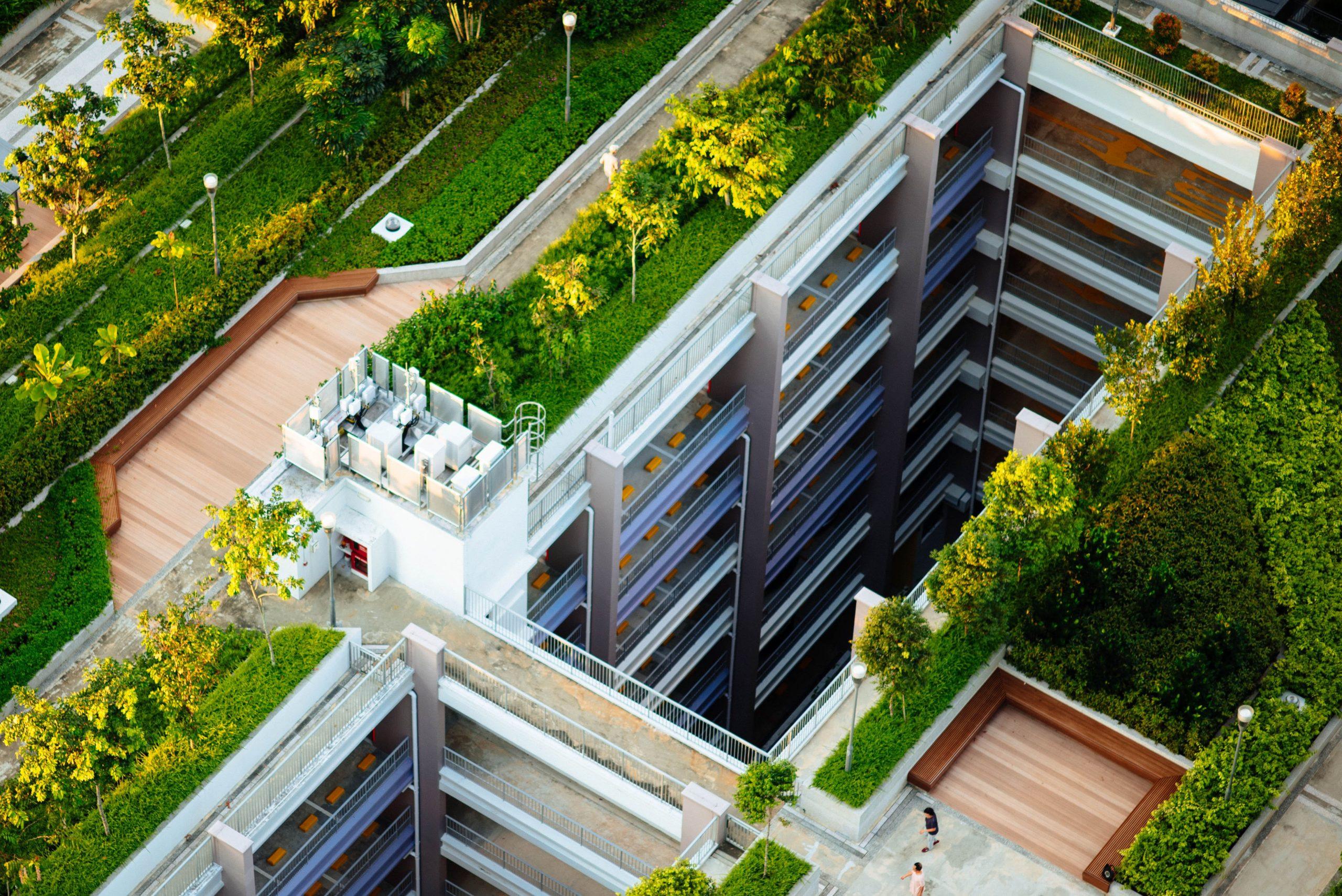
While adding planters to rooftops or plaza decks enhances natural beauty, building owners must prioritize detail-oriented installation and maintenance. This approach prevents clogged drains, water leaks, and concrete cracks from root intrusion, ensuring long-term structural integrity and peace of mind.
 |
Need Support? |



 Waterproofing and Roofing
Sheet vs Fluid Applied Waterproofing
Waterproofing and Roofing
Sheet vs Fluid Applied Waterproofing
In any residential or commercial building, there are usually only two main types of materials used for waterproofing – sheet or liquid membrane. Although neither option is inherently better...
 Waterproofing and Roofing
Common Problems Associated with Poor Waterproofing
Waterproofing and Roofing
Common Problems Associated with Poor Waterproofing
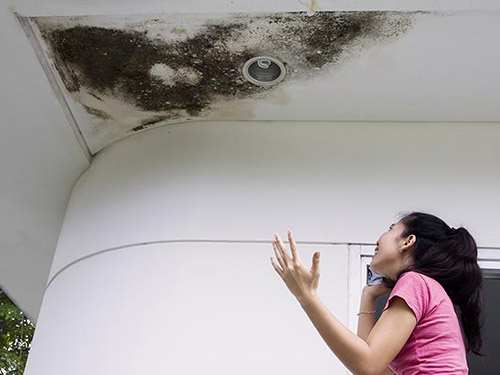
In order to construct a building that will stand the test of time, one of the key factors is the application of high-quality waterproofing. A poorly designed and installed...
 Concrete
Diagnosing 5 Common Concrete Sealer Problems
Concrete
Diagnosing 5 Common Concrete Sealer Problems
When a concrete sealer does not look or perform as expected, the cause can usually be traced back to over-application, application in...

Sign up for our newsletter